The lamp is on. Almost nothing is visible.
Getting here
Far enough out to be dark.
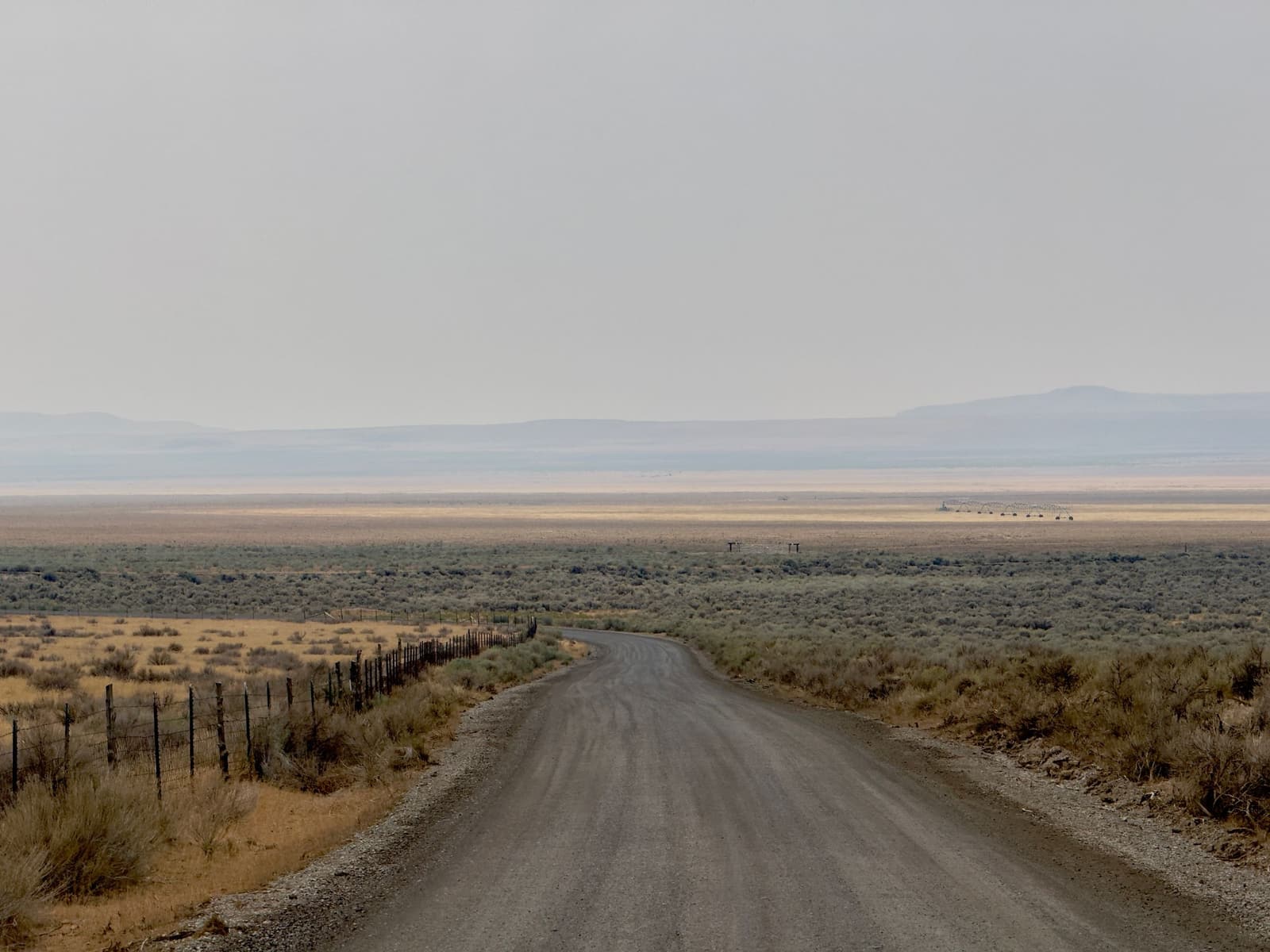
The werf is 90 km of gravel from the nearest tar and there is no public transport of any kind. That is not an inconvenience to apologise for -- it is the reason the meter reads 21.85.
3 ways in
From Windhoek
5 h 30 driving
South on the B1, then west on the C19 through Maltahohe. The last 90 km is gravel and takes longer than the map says. Arrive before four so you are not driving it in the dark.
From Walvis Bay
5 h driving
Inland on the C14 over the Kuiseb. Spectacular, slow, and entirely unpaved after Solitaire.
From Keetmanshoop
4 h driving
North on the B1 and west at Mariental. The flattest of the three approaches.
1,180 metres up
The werf sits at 1,180 m. Thin, dry air is most of why this sky is what it is: less atmosphere to scatter what little light there is, and almost no water vapour to hold it.
The coordinates are 25.000° south, 16.000° east. Those two numbers are what every figure on this site is computed from — including the one that tells you the galactic centre climbs to 86.0° here. That is nearly overhead, and it is the single biggest reason this latitude is worth the drive: the brightest part of the galaxy passes through the thinnest air you can stand under.
When to come: April to October
The dry season. Cloud cover, not darkness, decides how many nights you actually get, and between April and October there is very little of it. This site does not forecast weather and will not pretend to -- but the darkness figures on every page are computed, and they hold whatever the sky does.
3,363 hours
Of true astronomical darkness in a year, computed night by night from this latitude. That is what you are actually buying.
No nights
On which the sun fails to reach eighteen degrees below the horizon. At this latitude there is no season without real darkness in it, which is not true of most dark-sky sites in the northern hemisphere.
8 h 53
Of darkness on the night this page was built for. It moves by several hours across the year, and every page here recomputes it rather than quoting an average.